Research Article | | Peer-Reviewed

Population Dynamics and Ecological Patterns of Vitalaria paradoxa Nilotica Nilotica in the Gambella Region: Implications for Sustainable Management in South Western Ethiopia

Received: 17 January 2025     Accepted: 2 July 2025     Published: 11 August 2025
Views:       Downloads:
Abstract

Conservation and sustainable management practices are crucial for preservation of most threatened species of Vitalaria paradoxa Nilotica Nilotica for enhancing the socio-economic benefit in Ethiopia. This study employs quantitative methods to assess the population dynamics and regeneration status of Vitellaria paradoxa Nilotica (VPN) across three sites in the Gambella Regional State: Terkudi in Abobo district, Elia in Itang district, and Ateti in Gog district. Primary data were collected through transect walk and secondary data were gathered from existing documents. A forest inventory was conducted by establishing nine transect lines, with five sample quadrats per line, leading to an effective sampling area of 4.5 hectares. The results indicate a total tree population of 463, with the highest density in Ateti site (185 trees) and the lowest in Elia (131 trees). Sapling counts further favor Ateti, which recorded 76 saplings compared to Elia's 46. The average diameter at breast height (DBH) was 14.7cm, with Terkudi showing the largest mean DBH (15.10cm) and Elia the smallest (14.37cm). The average tree height across sites was 10.84 meters, reflecting generally healthy growth conditions, albeit impacted by anthropogenic activities. The findings of this study underscore the significant influence of environmental factors, specifically altitude and slope on height of the population dynamics of Vitalaria paradoxa Nilotica in the Gambella Region. The strong positive correlation coefficients across the three sites indicate that increased altitude is associated with heightened plant growth and the statistically significant P-values further validate these relationships. The study highlights the need for improved management strategies, including artificial plantations and agroforestry systems, to enhance food security and economic gains. The findings underscore the significant regeneration potential of VPN in Gog Woreda, while emphasizing the threats posed by agricultural expansion and human settlement. Effective management and community-based initiatives are essential for protecting and enhancing the ecological and economic value of VPN in the region.

Published in International Journal of Atmospheric and Oceanic Sciences (Volume 9, Issue 2)
DOI 10.11648/j.ijaos.20250902.11
Page(s) 78-89
Creative Commons

This is an Open Access article, distributed under the terms of the Creative Commons Attribution 4.0 International License (http://creativecommons.org/licenses/by/4.0/), which permits unrestricted use, distribution and reproduction in any medium or format, provided the original work is properly cited.

Copyright

Copyright © The Author(s), 2025. Published by Science Publishing Group

Keywords

Conservation, Sustainable-management, Population, Dynamics and Regeneration

1. Introduction
Shea tree, scientifically known as Vitellaria paradoxa, thrives in its natural ecosystem, forming a belt across Africa from Senegal to the Sudan and the Ethiopian border . These species includes two subspecies: Vitellaria paradoxa subsp. paradoxa and Vitellaria paradoxa subsp. nilotica. The latter, commonly referred to as the shea tree, is particularly significant for rural women who rely on it for oil extraction The butter derived from its nuts is a vital product, frequently employed in cooking, lighting, soap manufacturing, skin moisturizing, and traditional medicine .
In Ethiopia, Vitellaria paradoxa subsp. nilotica is adapted to low altitudes (≤600 m.a.s.l) and poor soil types, primarily found in the Abobo, Itang, Gambella, and Gog Woredas of the Agnua zone within the Gambella National Regional State . Unfortunately, populations of this subspecies are declining due to both anthropogenic and natural factors, notably recurring fires in their habitat . While the shea tree is a crucial resource for the Agnua ethnic groups, providing food, feed, and traditional medicine, it has received little attention for sustainable industrial or cottage industry utilization .
The Gambella National Regional State is recognized for its substantial forest and woodland cover, which is essential to the livelihoods and culture of local communities. These communities heavily depend on non-timber forest products (NTFPs) for subsistence and income . NTFPs such as honey, spices, and essential oils from the region have significant potential for national and international trade . Sustainable production of these products can play a pivotal role in poverty reduction, economic growth, biodiversity conservation, and the provision of multiple ecosystem services .
The shea butter tree (Vitellaria paradoxa subsp. nilotica) is one of the key NTFPs utilized by local communities, particularly in the Agnua community of the Gambella region . Known for its high-quality, multipurpose oil, this tree has applications in cosmetics, food, and pharmaceuticals . Proper management and processing of shea butter can provide additional income for local communities . Enhancing management practices can ensure sustainable production, improve quality and productivity, and promote value addition through improved supply chains . There is a lack of detailed information on the population structure of Vitellaria paradoxa in the Gambella region, particularly concerning the effects of environmental and anthropogenic factors. Current knowledge about the phenology of the shea butter tree, including flowering and fruiting patterns, is inadequate for optimizing harvesting and management practices . There is a need for more research on effective management strategies that can enhance the sustainability of shea butter production while supporting local communities . The general objective of this study is to assess the degradation status of Vitellaria paradoxa in the Gambella region by investigating its population structure and ecology. The findings will aim to inform sustainable management practices that enhance the resilience and productivity of this vital resource for local communities.
2. Methdology
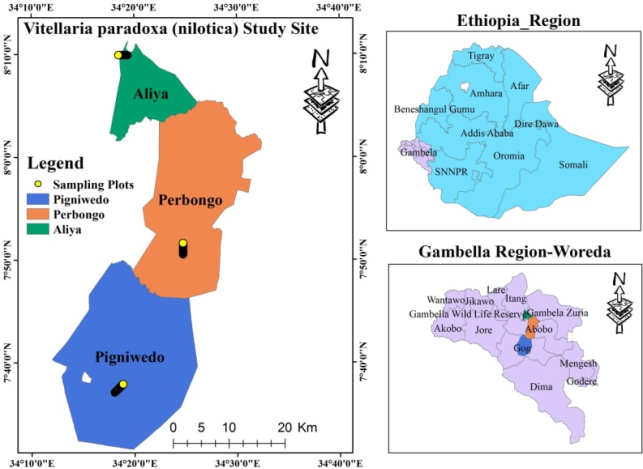
Gambella Regional State is situated between 8°N latitude and 34°E longitude. Gambella Regional State is located in the western part of Ethiopia, bordered by South Sudan to the west (Figure 1). It is characterized by a diverse landscape that includes wetlands, rivers, and forests, making it one of the unique ecological zones in the country. The region experiences a tropical savanna climate, with distinct wet and dry seasons. Average temperatures range from 15°C to 30°C, with higher temperatures during the dry season (November to April). The annual rainfall averages between 800mm and 1,200mm, with the majority occurring from June to September. Dominant plant species include Vitellaria paradoxa (shea tree), acacia species, and various grass species.
A quantitative methods, was employed to collect essential data for the study. Primary data was collected through fieldwork, including transects walks for species inventory. Secondary data was compiled through a thorough review of existing documents. Primary data was sourced used to collect vegetation data from three sites: Terkudi in Abobo Woreda, Elia in Itang Woreda, and Ateti in Gog Woreda. These locations within the Agnua zone are recognized for their populations of Vitellaria paradoxa (VPN), specifically in the districts of Gog, Itang, and Abobo, encompassing the Terkudi, Elia, and Ateti sites.
To conduct a forest inventory and assess the population structure of the shea butter tree, nine transect lines were established three each at the Terkudi site (Abobo Woreda), Elia site (Itang Woreda), and Ateti site (Gog Woreda) within the Agnua zone. Each transect line was maintained at a length of 1km. On each line, five sample quadrats, spaced 100 meters apart, were laid out, each sample plot measuring 50 m x 20 m (0.1 ha). This arrangement resulted in an effective sampling area of 4.5 ha across the three Woredas.
Figure 1. Map of the study site.
The transect lines were positioned 1.5km apart. A quadrat of 50m x 20m was chosen as it is well-suited for the woodland/forest vegetation type and facilitates easier enumeration (Whittaker, 1978). The transect lines were established using a GPS, measuring tape, and compass. Distances from the starting point of each transect line to the successive quadrats were recorded in the GPS for future reference and verification. Additionally, site observations and desk reviews were conducted to classify vegetation types and identify dominant species of Vitellaria paradoxa subsp. nilotica, in the designated sites of Terkudi, Elia, and Ateti. Data collected encompassed population counts, diameter class distribution, height class distribution, and basal area class distribution of the VPN tree. The regeneration status was assessed through seedling and sapling counts, categorizing seedlings under 1.5 m as seedlings and those between 1.5m and 3m as saplings/recruits.
Data Analysis
The population structure of Vitellaria paradoxa and other species data was analyzed by of diameter, height, and basal area classes for all trees with a diameter at breast height (dbh) of ≥3cm. The regeneration trends (seedling and sapling counts) of Vitellaria paradoxa were, estimating the percentage composition of Vitellaria paradoxa based on the counts. Size class for diameter, height, and basal area per tree were also developed to examine the stand structure. SPSS and Python were used to analyze the data.
3. Results and Discussions
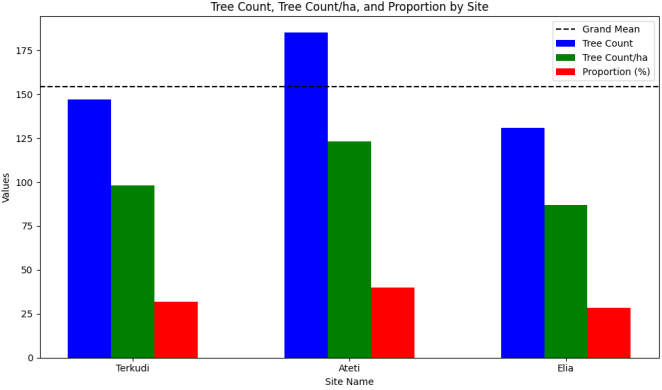
The population densities of Vitellaria paradoxa subsp. nilotica have been continuously declining in their natural habitats over the years, primarily due to both anthropogenic and natural factors, with recurring annual fires being a significant driver. The population structure of this species was chosen in the respective weredas of the region: Terkudi in Abobo district, Ateti in Gog District, and Elia in Itang District of the Agnua zone respectively. Result in Figure 2 shows the grand mean across all sites shows a total of 463 trees with an average density of 102.8 trees/ha. This provides a baseline for understanding tree distribution and health in the region. The Terkudi site has a total of 147 VPN trees, resulting in a density of 98 trees per hectare. This indicates a moderate level of tree presence, contributing 31.74% to the overall tree count. The Ateti site has the highest tree count (185) and density (123 trees/ha), accounting for nearly 40% of the total. This suggests optimal conditions for tree growth, making it a vital area for biodiversity. The Elia site exhibits with 131 trees and a density of 87 trees/ha, Elia site has the lowest tree count and proportion (28.29%).
Figure 2. Shows (VPN) tree count in number, tree count per hectare and proportion per sites.
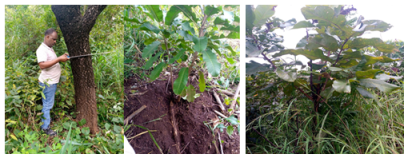
Figure 3. Show pictorial representation of VPN tree, sapling and seedling stages.
Result in our study indicates that while it has a significant number of trees, it is less dense compared to the other sites. The analysis reveals distinct differences in tree density and counts across the sites. Ateti stands out as the most productive site, which could be attributed to various factors such as soil quality with respect to good physic-chemical factors, water availability, and less anthropogenic pressure. In contrast, Terkudi and Elia have poor environmental factors for lower counts and densities. The result with the higher tree counts and densities in Ateti suggest better ecological health and potentially greater biodiversity. This site could serve as a key area for conservation efforts, habitat restoration, and ecological studies. The findings further highlight the importance of targeted management strategies. Areas with lower tree counts, such as Terkudi and Elia, need strong interventions to benefit from reforestation efforts or protective measures against deforestation and degradation.
The decline in (VPN) shea tree populations in the study area is often attributed to human activities such as agricultural expansion, overharvesting, savanna wild fires and land conversion for other uses. In a similar study conducted in Benin, it was noted that (VPN) shea trees are under threat due to increasing population growth and inappropriate agricultural practices, which resonate with the findings from the Gambella area Natural disturbances, including recurring fires, have been identified as significant threats to (VPN) shea tree populations.
The similar study conducted by highlighted that the (VPN) shea tree's habitat is often modified due to charcoal production and other natural pressures, which can lead to population declines (The differences in tree density and health across the three sites in Gambella reflect findings from other studies that show how environmental factors such as soil quality and water availability influence tree growth. For instance, the Ateti site, with the highest density, may indeed have more favorable conditions compared to Terkudi and Elia, which aligns with observations in other regions where land management practices significantly affect tree populations.
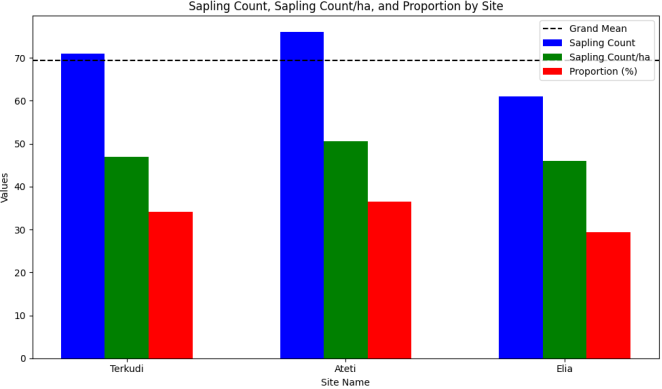
Figure shows the VPN tree forms as tree, sapling and seedling stages in the study sites. The regeneration status is determined from seedling and sapling count determined from attaining ≥1.5-3m in height classified as saplings/recruits. The result in Figure 4 provides information on sapling counts across three sites. The result indicates total sapling count and sapling count per hectare, and proportion of the total sapling population. The grand mean indicates a total of 208 saplings across the sites, with an average density of 46 saplings per hectare. This provides a baseline for evaluating sapling distribution in the region.
Figure 4. Show VPN Sapling count per hectare and proportion per site.
Terkudi site has a total of 71 saplings, resulting in a density of 47 saplings per hectare. This accounts for 34.13% of the total sapling count, indicating a relatively healthy presence of young trees. The Ateti site shows the highest sapling count with 76, leading to a density of 50 saplings per hectare. This represents 36.53% of the total, suggesting favorable conditions for sapling growth. Elia site with 61 saplings and a density of 46 saplings per hectare, Elia site has the lowest count and proportion (29.32%). While it still maintains a decent density, it lags behind Terkudi and Ateti. The analysis reveals variations in sapling density and counts among the three sites. Ateti stands out with the highest sapling count, which could be linked to optimal environmental conditions such as soil fertility, adequate moisture, and lower competition from mature trees. Conversely, Elia’s site for lower count may indicate environmental stressors or competition that hinder sapling establishment.
The presence of saplings is crucial for forest regeneration and overall ecosystem health. Higher sapling densities in sites like Ateti suggest strong potential for future tree growth and biodiversity. Terkudi also shows promising sapling counts, which could support ongoing forest recovery efforts. The differences in sapling counts highlight the need for targeted management strategies. Areas with lower sapling counts, particularly Elia, may benefit from interventions such as planting additional saplings or enhancing site conditions to promote growth.
The findings in our study regarding sapling counts across the three sites in the Gambella Regional State provide valuable insights into the regeneration status of the forest ecosystem with respect to VPN. The data indicates a total of 208 saplings with an average density of 46 saplings per hectare, which serves as a baseline for evaluating sapling distribution in the region. The presence of saplings is critical for forest regeneration and overall ecosystem health. A study conducted by , showed that a higher sapling densities, such as those observed in suggest a strong potential for future tree growth and biodiversity, which is essential for maintaining ecological balance.
The differences in sapling counts among the sites reflect the influence of environmental conditions on sapling establishment. For instance, higher sapling count may be attributed to favorable conditions such as soil fertility and adequate moisture, which are known to enhance sapling growth . The result in our study aligns with findings from other studies that emphasize the role of environmental factors in shaping plant community structures . The analysis highlights the need for targeted management strategies, particularly in areas with lower sapling counts like Elia. Interventions such as planting additional saplings or improving site conditions can promote growth and enhance regeneration efforts. This is consistent findings from other research advocating for active management to support forest recovery . Our findings allows for a clear understanding of the regeneration status, which is crucial for developing effective conservation strategies.
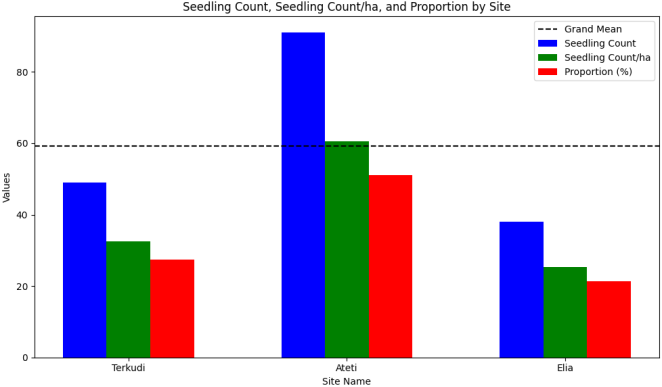
Seedlings are vital for forest regeneration and resilience. Result in Figure 5 provides the data outlines for seedling counts across three different sites in the Gambella Regional State, categorized by wereda/district and site name. The metrics include area, total seedling count, seedling count per hectare, and proportion of the total seedling count. The grand mean indicates a total of 178 seedlings across all sites, with an average density of 39.5 seedlings per hectare. It serves as a baseline for evaluating seedling distribution and plant health of VPN in the region. The Terkudi site has a total of 49 seedlings, resulting in a density of 32.6 seedlings per hectare. It contributes 27.5% to the overall seedling count, indicating a relatively moderate presence of young plants. The Ateti site stands out with the highest number of seedling count of 91, leading to a density of 60.6 seedlings per hectare.
Figure 5. Show VPN seedling count per hectare and proportion per site.
The Ateti site accounts for 51.12% of the total seedlings, highlighting it as a critical area for regeneration and biodiversity with respect to VPN. While Elia site score only 38 seedlings and a density of 25.3 seedlings per hectare, Elia has the lowest count and proportion (21.34%). The result data in our study shows significant variation in seedling density and counts among the three sites. Ateti's higher seedling count suggests favorable environmental conditions, such as soil quality with respect phyico-chemical properties, soil moisture availability, and possibly lower competition from established vegetation’s. The phonological patterns of the VPN, particularly the shea tree, demonstrated seasonal fruiting and harvesting times influenced by climatic conditions and wildlife interactions.
Conversely, Elia's site lower seedling density may indicate adverse conditions affecting seedling growth, such as poor soil fertility or higher competition. The higher density of seedlings in Ateti indicates strong potential for future forest growth and ecological stability. In contrast, the lower counts in Elia may hinder long-term forest recovery and biodiversity in that area. The findings of our study emphasize the importance of conserving areas with high seedling densities. So, protecting Ateti by enhancing the ecological conditions while in Terkudi and Elia will be crucial for ensuring the sustainability of forest ecosystems in the region.
The presence of a higher density of seedlings in Ateti suggests a strong potential for future forest growth and ecological stability. In contrast, the lower counts in Elia could hinder long-term forest recovery and biodiversity in that area . The findings emphasize the importance of conserving areas with high seedling densities, particularly Ateti. Protecting this site while enhancing ecological conditions in Terkudi and Elia will be crucial for ensuring the sustainability of forest ecosystems in the region .
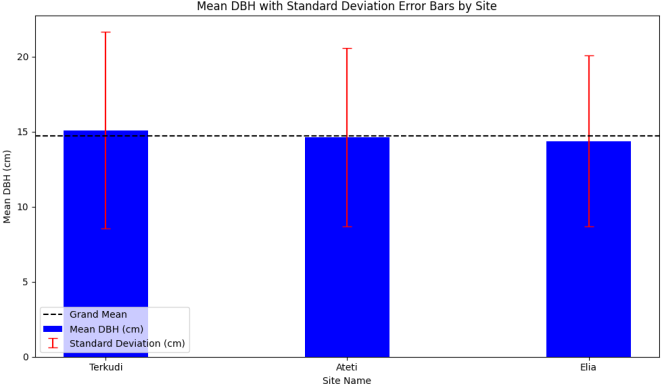
Result in Figure 6 provides the mean diameter at breast height (DBH) of VPN trees across three different sites in the Gambella Regional State. The data include area, mean DBH, standard deviation (SD), maximum DBH, and minimum DBH values. Mean DBH in Terkudi site exhibits the highest mean DBH at 15.10cm, indicating a generally larger tree size compared to the other sites. The result indicates better growth conditions or older tree populations. The Ateti site show means DBH is slightly lower at 14.63cm, which still reflects a reasonable tree size. The standard deviation (5.94) indicates moderate variability in tree sizes. The Elia site has the lowest mean DBH at 14.37cm, with the smallest maximum DBH of 50.5cm.
The standard deviation (5.71) is slightly lower than Ateti, suggesting that a more consistent size among trees. The maximum DBH recorded in Elia (50.5cm) is noteworthy, indicating that there are some very large trees present despite the lower mean DBH. Terkudi site has the highest maximum DBH of 41cm, while Ateti's maximum is 28cm. The minimum values are relatively similar across the sites, with Terkudi having the lowest minimum DBH at 3cm. This suggests that all sites have a range of smaller trees, but Terkudi has a notable number of very small trees. The analysis result shows that Terkudi has the highest mean DBH, indicating potentially favorable growth conditions. The higher SD suggests a mix of tree ages and sizes, which can be beneficial for ecosystem resilience in savanna vegetation. Ateti and Elia, while having slightly lower mean DBH, show that they still support healthy tree populations.
Result of current study shows that larger trees (higher DBH) are often important for various ecological functions, such as providing habitat and improving biodiversity. Terkudi's larger average VPN size contributes positively to local wildlife and ecosystem stability. Given the variability in tree sizes in Terkudi, forest management practices could focus on maintaining this diversity, perhaps through selective logging or conservation efforts. In contrast, Ateti and Elia may benefit from initiatives aimed at promoting growth in smaller trees to increase overall biomass and diversity. The result in our study suggests potential challenges for seedling establishment and survival in savanna vegetation.
Similar study by showed that the diameter class distribution of VPN was positively skewed. 48.54% of the trees had diameters lying above the mean, which was 31.4cm. The diameter size of the present assessment is by far smaller than the previous study which shows the VPN populations are dominated by younger trees than old. The highest DBH class distribution in terms of tree volume and basal area was recorded in Ateti site Gog wereda, while the least DBH class distribution in terms of tree volume and basal area was recorded in Elia of Itang wereda. Terkudi shows the highest variability in tree sizes (SD of 6.54), which might indicate a mix of tree ages and sizes. In contrast, Ateti and Elia have lower SD values, implying a more uniform tree population.
The result implies that the VPN population structure in terms of DBH with corresponding basal area is highly disturbed in Elia and Terkudi sites than what was observed in Ateit of Gog sites. The population of VPN tree of Elia and Terkudi sites may have been highly impacted by the expansion of agriculture through deforestation of large trees. The findings our study showed that regarding the diameter at breast height (DBH) of Vitellaria paradoxa subsp. nilotica (VPN) across the sites in the Gambella Regional State provide important insights into the population structure and plant health of these trees in savanna vegetation.
The analysis of present study indicates that Terkudi has the highest mean DBH, suggesting favorable growth conditions, while Ateti and Elia show slightly lower mean DBH values but still support healthy tree populations. This variability in Terkudi suggests a mix of tree ages and sizes, which can enhance ecosystem resilience. So, larger trees are crucial for various ecological functions, such as providing habitat and improving biodiversity. Terkudi's larger average size may positively contribute to local wildlife and ecosystem stability. The presence of a diverse age structure in Terkudi could be beneficial for maintaining ecological balance. The findings suggest potential challenges for seedling establishment and survival, particularly in areas with a predominance of younger trees. noted that the diameter class distribution of VPN was positively skewed, indicating a dominance of younger trees, which aligns with the current assessment showing smaller diameter sizes compared to previous studies.
Figure 6. Show VPN mean DBH and SD per sites.
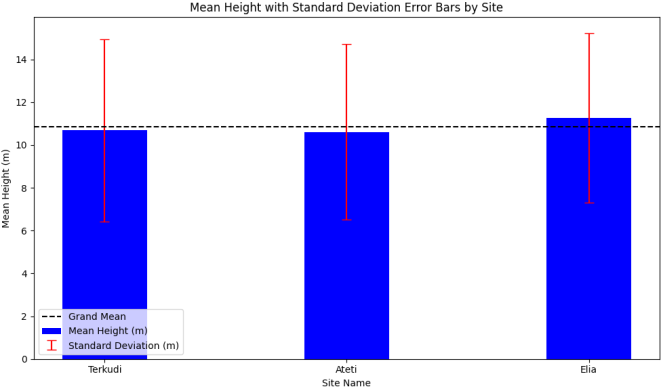
Result in Figure 7 indicates the mean height of trees across three sites in the Gambella Regional State, with data including area, mean height, standard deviation (SD), maximum height, and minimum height. The Terkudi site has mean height of trees is 10.68 meters, indicating a relatively tall tree population. The maximum height recorded is 21 meters, suggesting the presence of some very large trees of VPN. The Ateti site has a mean height slightly lower at 10.61 meters, with a maximum height of 24 meters, indicating that Ateti supports taller trees, even though the average height is almost on par with Terkudi. Elia has the highest mean height at 11.25 meters. The maximum height is 21 meters, with a minimum height of 3 meters, indicating a diverse age and size distribution. Terkudi site has the highest standard deviation (4.25), which suggests greater variability in tree heights compared to the other sites. This could be indicative of a mixture of ages and growth conditions. Ateti's SD (4.09) is also relatively high, while Elia has the lowest SD (3.96), suggesting a more consistent tree height distribution. Ateti has the highest maximum height (24 meters), which is significant as it suggests the potential for very tall trees in this area.
The minimum heights across all sites are similar, with Terkudi recording a minimum of 3 meters, signifying that all sites have some smaller trees present. The analysis reveals that Elia has the highest average tree height, which could indicate favorable growing conditions or an older tree population. Terkudi and Ateti show similar average heights, but Ateti has the tallest individual tree recorded. The variability in height (as indicated by standard deviation) is notable in Terkudi, suggesting a diverse age range, which is beneficial for ecological resilience. Taller trees play a vital role in forest ecosystems, offering habitats for various species and contributing to overall biodiversity. The presence of significant height variation in Terkudi suggests it may provide a range of microhabitats, essential for supporting different species.
Result of current study show that the height and variability in Terkudi, forest management practices could focus on maintaining this diversity, perhaps by promoting the growth of younger trees and ensuring that older, taller trees are preserved. In contrast, Ateti may benefit from efforts to enhance the growth of shorter trees to improve overall forest structure. Protecting areas with taller trees, particularly in Ateti, is crucial as they contribute to carbon sequestration and ecological stability. The future forest conservation strategies should aim to preserve these trees while also fostering growth in younger, smaller trees across all sites.
Similar study conducted by showed that the mean height estimate of VPN population is 11.3 meter which agrees with the findings of present study. The highest tree height class distribution with corresponding frequency was recorded in Ateti site Gog wereda, while the least tree height class distribution with corresponding frequency was recorded in terkudi of Abobo wereda. The result also shows that even though there are high trees recoded in Elia site it is much disturbed with least frequent across the landscape which shows the area is much disturbed because of anthropogenic factors like expansion of large scale agriculture which caused the deforestation of VPN trees. Conversely in Ateti sites the tree height with the corresponding frequency is somewhat uniform which shows the population is dominated with young trees which are less disturbed by anthropogenic factors of expansion for agricultural investment.
The variability in DBH is beneficial for ecological resilience, as it can support a range of microhabitats for different species. In contrast, Elia's lower SD (3.96) suggests a more uniform tree height distribution, which may indicate a less diverse age structure. Taller trees play a crucial role in forest ecosystems by providing habitats for various species and contributing to overall biodiversity. The significant height variation in Terkudi suggests it may offer a range of microhabitats, essential for supporting different species. The presence of older, taller trees is particularly important for carbon sequestration and ecological stability. The findings indicate that while Elia has the highest average tree height, it is also significantly disturbed by anthropogenic factors such as agricultural expansion, which has led to deforestation of VPN trees. This disturbance may hinder the regeneration potential of the site. Conversely, Ateti appears to be less affected by such pressures, with a more uniform tree height distribution dominated by younger trees. Given the variability in tree heights in Terkudi, forest management practices should focus on maintaining this diversity by promoting the growth of younger trees and ensuring the preservation of older, taller trees. In Ateti, efforts could be directed towards enhancing the growth of shorter trees to improve overall forest structure and resilience.
Figure 7. Show means height and SD of VPN per each site.

Result in Table 1 show indicate a strong positive relationship between mean height and mean slope for Vitalaria paradoxa Nilotica across all sites, with coefficients of 0.88 (Terkudi), 0.98 (Ateti), and 0.78 (Elia). The result indicates that as the mean height of the plants increases, the slope percentage also tends to increase, indicating a potential influence of topography on plant growth. The P-values associated with the correlations (0.0032 for Terkudi, 0.001 for Ateti, and 0.003 for Elia) are all below the significance threshold of 0.05. This indicates that the observed correlations are statistically significant, reinforcing the reliability of the relationship between mean height and mean slope. The strong correlations suggest that specific environmental conditions, such as moderate slopes and optimal heights, play a critical role in the successful growth of Vitalaria paradoxa. Sustainable management practices should prioritize the conservation of these environmental attributes to support the species' population dynamics.
Our study indicates that integrating knowledge about population dynamics and phonological patterns into management plans can help in creating effective conservation strategies. For instance, protecting areas with optimal mean heights and slopes can enhance the habitat quality for (VPN) Vitalaria paradoxa. So engaging local communities in monitoring and managing these environmental factors can enhance sustainable practices, ensuring that the needs of both Vitalaria paradoxa Nilotica Nilotica and the local population are met. The investigation into the population dynamics and phonological patterns of Vitalaria paradoxa Nilotica in the Gambella Region reveals significant correlations between environmental factors and plant growth. These findings our study underscores the importance of targeted conservation efforts and sustainable management practices that consider the ecological needs of this species. By focusing on the identified relationships between height, slope, and population dynamics, stakeholders can better ensure the long-term viability of Vitalaria paradoxa Nilotica in its natural habitat.
Table 1. Correlation of mean height of with slope of VPN per sites.

Site Nam

Mean Height (M)

Mean Slope %

Correlation

P-value

Terkudi

10.68

3.65

0.881229

0.0032

Ateti

10.61

3.80

0.981229

0.001

Elia

11.25

5.10

0.781229

0.003

Result in Table 2 shows that the relationship between environmental factors, such as mean height and mean altitude, plays a vital role in understanding the population dynamics of Vitalaria paradoxa Nilotica in the Gambella Region. The correlation coefficients (0.84 for Terkudi, 0.74 for Ateti, and 0.75 for Elia) indicate a strong positive relationship between mean height and mean altitude across all sites. This suggests that as the altitude increases, the height of Vitalaria paradoxa Nilotica also tends to increase. Such a relationship may imply that higher altitudes provide favorable conditions for plant growth, such as better drainage or cooler temperatures. The P-values for all sites (0.0380 for Terkudi, 0.04806 for Ateti, and 0.002806 for Elia) are below the significance threshold of P -0.05. This indicates that the observed correlations are statistically significant, reinforcing the reliability of the relationship between mean height and mean altitude.
The strong correlations suggest that altitude plays a significant role in determining the growth potential of Vitalaria paradoxa. Management practices should focus on preserving high-altitude habitats that are conducive to the growth of this species. As altitude appears to influence plant height positively, conservation efforts should prioritize the protection of areas at optimal altitudes. This can help enhance biodiversity and ensure the sustainability of Vitalaria paradoxa Nilotica populations. Local knowledge in Gambella region can be invaluable in identifying critical habitats and implementing sustainable practices that benefit both the species and the community. The investigation into the population dynamics and phonological patterns of Vitalaria paradoxa Nilotica in the Gambella Region reveals significant correlations between mean height and mean altitude. The results of current study highlight the importance of altitude as a factor influencing plant growth and underscore the need for targeted conservation strategies. By focusing on the identified relationships, stakeholders can enhance the sustainability of Vitalaria paradoxa, ensuring its long-term viability in its natural habitat.
Table 2. Correlation of mean height of with mean altitude of VPN per sites.

Site Name

Mean Height (m)

Mean Altitude (m)

Correlation

P-value

Terkudi

10.68

474.53

0.837547

0.0380

Ateti

10.61

464.60

0.737547

0.04806

Elia

11.25

471.71

0.747547

0.002806

4. Conclusion and Recommendation
The study of the Vegetative ecology and dynamics of (VPN) across various sites in the Gambella Regional State reveals critical insights into the tree population dynamics, regeneration status, and anthropogenic impacts on these ecosystems. The study reported a total tree population of 463, with the highest density observed in the Ateti site of Gog wereda (185 trees), indicating less anthropogenic pressure compared to the Elia site of Itang wereda, which recorded only 131 trees. Sapling counts also favored Ateti, with 76 saplings, while Elia had the least with 46. Overall, the regeneration status of VPN was significantly better in Gog wereda, suggesting that agricultural expansion is a primary driver of tree population degradation in Itang and Abobo weredas.
The average diameter at breast height (DBH) of VPN trees was found to be 14.7cm, with Terkudi showing the largest mean DBH (15.10cm) and Elia the smallest (14.37cm). The average tree height across sites was 10.84 meters, indicating generally healthy growth conditions, though impacted by anthropogenic activities. The phonological patterns of the VPN, particularly the shea tree, demonstrated seasonal fruiting and harvesting times influenced by climatic conditions and wildlife interactions. Despite the economic potential of the VPN for local communities, barriers exist in terms of accessibility and harvesting practices. The long distances to natural forest areas hinder fruit collection, often resulting in early consumption by wildlife. The assessment highlights the need for improved management strategies, including artificial plantations and agroforestry systems, to enhance local food security and economic benefits.
The study concludes that the VPN populations in the Gambella region exhibit significant potential for regeneration and economic benefit, particularly in Gog wereda. However, the degradation caused by agricultural expansion, human settlement, and wildfires poses a critical threat to these ecosystems. Effective management, including in-situ conservation and community-based initiatives, is essential to protect and enhance the VPN's ecological and economic value. Hence, promote the integration of VPN trees in agricultural practices to enhance fruit and seed collection while providing environmental benefits. Further, implementation of conservation strategies that prioritize the protection of existing VPN populations, particularly in high-impact areas like Itang and Abobo weredas. It also advisable for establish nurseries near community farm lands to supply VPN seedlings, making it easier for households to cultivate and harvest their own trees. So, engaging local and regional governments to promote policies that support sustainable land use and forest management practices address the drivers of deforestation and degradation in the region.
Abbreviations

cm

Centimeter

DBH

Diameter at Breast Height

GPS

Geographic Positioning System

Ha

Hectare

Km

Kilometer

M

Meter

mm

Millimeter

SD

Standard Deviation

VPN

Vitlaria Paradoxa Nilotica

Acknowledgments
We would like to express our heartfelt gratitude to the Gambella Regional State Bureau of Agriculture for their unwavering support and collaboration in our initiatives. Your commitment to agricultural development and community welfare is invaluable to our collective efforts. We also extend our sincere appreciation to the local people of the Gambella community. Your active participation and insights have been instrumental in shaping our projects, and we are thankful for your trust and cooperation. Additionally, we acknowledge Tedesse Gole, Manager of the Ethiopian Coffee Forest Forum, for his leadership and guidance. Your expertise and dedication to sustainable practices have significantly enriched our work and inspired us to strive for excellence. Together, we look forward to continuing our partnership and making a positive impact in the Gambella region.
Conflicts of Interest
The authors declare no conflicts of interest.
References
[1] Aderounmu, A. F (2019). Effects of stock age, hormone types and concentrations on rooting and early growth of Vitellaria paradoxa C. F. Gaertn. Stem Cuttings. 1, 1-9.
[2] Affi Jean Paul Attikora (2024). Genetic diversity and population structure of superior shea trees (Vitellaria paradoxa subsp. paradoxa) using SNP markers for the establishment of a core collection in Côte d’Ivoire BMC Plant Biology.
[3] Aleza, K., Wala, K., Bayala, J., Villamor, G. B., Dourma, M., Atakpama, W., Akpagana, K (2015). Population structure and regeneration status of Vitellaria paradoxa (C. F. Gaertner) under different land management regimes in Atacora Department, Benin. Agroforestry Systems, 89(3), 511-523.
[4] Bayala, J., Balesdent, J., Marol, C., Zapata, F., Teklehaimanot, Z., Ouedraogo, S. J (2006). Relative contribution of trees and crops to soil carbon content in a parkland system in Burkina Faso using variations in natural 13C abundance. Nutrient Cycling Agroecosyst, 76: 193-201.
[5] Demel Teketay, Deribe Gurmu and Tesfaye Bekele. (2003). Vitellaria paradoxa subsp. nilotica, a multipurpose industrial oilseed tree: Botany, Distribution, Ecology and Uses.
[6] Deribe Gurmu. (2009). Phytogeography, Genetic Variation and Mating System of Vitellaria paradoxa subsp. nilotica (Kotschy) A. N. Henry in Ethiopia. PhD Thesis Research Proposal submitted to EARO, Addis Abeba and University of Putra, Kula Lumpur, Malasyia.
[7] Elias, M., & Carney, J. (2007). African shea butter: A feminized subsidy from nature. Africa, 77(01), 37-62.
[8] EMA. (2003). Ethiopian Mapping Agency (EMA) is an Ethiopian government agency, a department within the Ministry of Finance and Cooperation.
[9] FDRE. (2007) Forest Development, Conservation and Utilization: Negarit Gazeta Proclamation No 542/2007, Federal Democratic Republic of Ethiopia, Addis Ababa.
[10] Gwali, S., Nakabonge, G., Okullo, J. B. L., Eilu, G., Nyeko, P., Vuzi, P. (2012). Morphological variation among shea tree (Vitellaria paradoxa Subsp. nilotica)„Ethnovarieties‟ in Uganda. Genetic resources and crop evolution, 59(8), 1883-1898.
[11] Holtzman, J (2004). The Shea butter value chain: Study synthesis and Recommendation for WATH. WATH Technical report No. 1, Dakar WATH.
[12] Iddrisu, A., Elegba, W., Klu, G. Y. P., Danso, K. L (2018). Observations on seed embryo and germination, seedling morphology and development of Vitellaria paradoxa (C. F. Gaertn.). Forests, Trees and Livelihoods.
[13] Issaka, A (2013). Morphological and genetic diversity in Vitellaria paradoxa (Shea Tree) across the savannah regions of Ghana. MSc. Thesis, George-August University of Goettingen, Goettingen.
[14] Konate, L. (2012). Creating Competitive Market Models Burinka Faso: The Case of NUNUNA Women’s Shea Butter Federation (pp. 1-4).
[15] Lemenih, M., & Woldermariam, T. (2010). Review of Forest, Woodland and Bushland Resources in Ethiopia Up to 2008. Ethiopian Environmental Review, No. 1 (Forum for Environmental, Addis Ababa), 131-173.
[16] Reynolds, N. (2010). Investing in Shea in West Africa--A U.S. Investor’s Perspective (pp. 1-24).
[17] Teklehaimanot, Z. (2004). Exploiting the potential of indigenous agroforestry trees: Parkia biglobosa and Vitellaria paradoxa in sub-Saharan Africa. Agroforestry Systems, 61-62(1-3), 207-220.
[18] Tesfaye Awas, Tamrat Bekele and Sebsebe Demissew. (2001). An ecological study of the vegetation of Gambella Region, southwestern Ethiopia. SINET: Ethiopian Journal of Science 24: 213-228.
[19] UNDP, (2010). United Nations Development Program, Human development Report. The real wealth of Nations.
[20] Whittaker, (1978). Reference details physiognomic approach original classification and taxonomic changes mapping of vegetation physiognomic changes.
Cite This Article
  • APA Style

    Tamirat, T., Tadesse, S., Gole, T. W. M., Tena, A., Seyoum, A. (2025). Population Dynamics and Ecological Patterns of Vitalaria paradoxa Nilotica Nilotica in the Gambella Region: Implications for Sustainable Management in South Western Ethiopia. International Journal of Atmospheric and Oceanic Sciences, 9(2), 78-89. https://doi.org/10.11648/j.ijaos.20250902.11

    Copy | Download

    ACS Style

    Tamirat, T.; Tadesse, S.; Gole, T. W. M.; Tena, A.; Seyoum, A. Population Dynamics and Ecological Patterns of Vitalaria paradoxa Nilotica Nilotica in the Gambella Region: Implications for Sustainable Management in South Western Ethiopia. Int. J. Atmos. Oceanic Sci. 2025, 9(2), 78-89. doi: 10.11648/j.ijaos.20250902.11

    Copy | Download

    AMA Style

    Tamirat T, Tadesse S, Gole TWM, Tena A, Seyoum A. Population Dynamics and Ecological Patterns of Vitalaria paradoxa Nilotica Nilotica in the Gambella Region: Implications for Sustainable Management in South Western Ethiopia. Int J Atmos Oceanic Sci. 2025;9(2):78-89. doi: 10.11648/j.ijaos.20250902.11

    Copy | Download

  • @article{10.11648/j.ijaos.20250902.11,
      author = {Teshome Tamirat and Semegnew Tadesse and Tadesse Wolde Mariam Gole and Aberu Tena and Assefa Seyoum},
      title = {Population Dynamics and Ecological Patterns of Vitalaria paradoxa Nilotica Nilotica in the Gambella Region: Implications for Sustainable Management in South Western Ethiopia
    },
      journal = {International Journal of Atmospheric and Oceanic Sciences},
      volume = {9},
      number = {2},
      pages = {78-89},
      doi = {10.11648/j.ijaos.20250902.11},
      url = {https://doi.org/10.11648/j.ijaos.20250902.11},
      eprint = {https://article.sciencepublishinggroup.com/pdf/10.11648.j.ijaos.20250902.11},
      abstract = {Conservation and sustainable management practices are crucial for preservation of most threatened species of Vitalaria paradoxa Nilotica Nilotica for enhancing the socio-economic benefit in Ethiopia. This study employs quantitative methods to assess the population dynamics and regeneration status of Vitellaria paradoxa Nilotica (VPN) across three sites in the Gambella Regional State: Terkudi in Abobo district, Elia in Itang district, and Ateti in Gog district. Primary data were collected through transect walk and secondary data were gathered from existing documents. A forest inventory was conducted by establishing nine transect lines, with five sample quadrats per line, leading to an effective sampling area of 4.5 hectares. The results indicate a total tree population of 463, with the highest density in Ateti site (185 trees) and the lowest in Elia (131 trees). Sapling counts further favor Ateti, which recorded 76 saplings compared to Elia's 46. The average diameter at breast height (DBH) was 14.7cm, with Terkudi showing the largest mean DBH (15.10cm) and Elia the smallest (14.37cm). The average tree height across sites was 10.84 meters, reflecting generally healthy growth conditions, albeit impacted by anthropogenic activities. The findings of this study underscore the significant influence of environmental factors, specifically altitude and slope on height of the population dynamics of Vitalaria paradoxa Nilotica in the Gambella Region. The strong positive correlation coefficients across the three sites indicate that increased altitude is associated with heightened plant growth and the statistically significant P-values further validate these relationships. The study highlights the need for improved management strategies, including artificial plantations and agroforestry systems, to enhance food security and economic gains. The findings underscore the significant regeneration potential of VPN in Gog Woreda, while emphasizing the threats posed by agricultural expansion and human settlement. Effective management and community-based initiatives are essential for protecting and enhancing the ecological and economic value of VPN in the region.},
     year = {2025}
    }
    

    Copy | Download

  • TY  - JOUR
    T1  - Population Dynamics and Ecological Patterns of Vitalaria paradoxa Nilotica Nilotica in the Gambella Region: Implications for Sustainable Management in South Western Ethiopia
    
    AU  - Teshome Tamirat
    AU  - Semegnew Tadesse
    AU  - Tadesse Wolde Mariam Gole
    AU  - Aberu Tena
    AU  - Assefa Seyoum
    Y1  - 2025/08/11
    PY  - 2025
    N1  - https://doi.org/10.11648/j.ijaos.20250902.11
    DO  - 10.11648/j.ijaos.20250902.11
    T2  - International Journal of Atmospheric and Oceanic Sciences
    JF  - International Journal of Atmospheric and Oceanic Sciences
    JO  - International Journal of Atmospheric and Oceanic Sciences
    SP  - 78
    EP  - 89
    PB  - Science Publishing Group
    SN  - 2640-1150
    UR  - https://doi.org/10.11648/j.ijaos.20250902.11
    AB  - Conservation and sustainable management practices are crucial for preservation of most threatened species of Vitalaria paradoxa Nilotica Nilotica for enhancing the socio-economic benefit in Ethiopia. This study employs quantitative methods to assess the population dynamics and regeneration status of Vitellaria paradoxa Nilotica (VPN) across three sites in the Gambella Regional State: Terkudi in Abobo district, Elia in Itang district, and Ateti in Gog district. Primary data were collected through transect walk and secondary data were gathered from existing documents. A forest inventory was conducted by establishing nine transect lines, with five sample quadrats per line, leading to an effective sampling area of 4.5 hectares. The results indicate a total tree population of 463, with the highest density in Ateti site (185 trees) and the lowest in Elia (131 trees). Sapling counts further favor Ateti, which recorded 76 saplings compared to Elia's 46. The average diameter at breast height (DBH) was 14.7cm, with Terkudi showing the largest mean DBH (15.10cm) and Elia the smallest (14.37cm). The average tree height across sites was 10.84 meters, reflecting generally healthy growth conditions, albeit impacted by anthropogenic activities. The findings of this study underscore the significant influence of environmental factors, specifically altitude and slope on height of the population dynamics of Vitalaria paradoxa Nilotica in the Gambella Region. The strong positive correlation coefficients across the three sites indicate that increased altitude is associated with heightened plant growth and the statistically significant P-values further validate these relationships. The study highlights the need for improved management strategies, including artificial plantations and agroforestry systems, to enhance food security and economic gains. The findings underscore the significant regeneration potential of VPN in Gog Woreda, while emphasizing the threats posed by agricultural expansion and human settlement. Effective management and community-based initiatives are essential for protecting and enhancing the ecological and economic value of VPN in the region.
    VL  - 9
    IS  - 2
    ER  - 

    Copy | Download

Author Information
  • Bamboo Development and Technology Department, Ethiopian Forestry Development, Addis Ababa, Ethiopia

  • Project Management Division, Tree Aid Project, Gambella, Ethiopia

  • Project Coordination Unit, Ethiopia Coffee Forest Forum, Addis Ababa, Ethiopia

  • Green Legacy and Artificial Plantation Division, Ethiopian Forestry Development, Addis Ababa, Ethiopia

  • School of Developemnt Study, Addis ababa University, Addis Ababa, Ethiopia